
Hamilton County Court Record Requests
For adult cases, the Hamilton County Clerk of Courts Records Search is the starting point. It covers Common Pleas, Municipal Court, Domestic Relations, and the First District Court of Appeals. Pick the right division first. Probate runs its own search and e-file service. Juvenile keeps a separate court-operated records channel. The public index will locate a name or case. It does not promise that every paper is viewable from home.
When the case comes up, write down the case number. Also note the document description and the filing or entry date. The Clerk says a clear request avoids delay. You can search online, send the Document Request Form, ask at the right counter, or call the Clerk's listed telephone channels to sort out a record or a setting. The form offers pickup, United States mail, or email delivery where allowed. A certified copy always needs a direct request to the Clerk. It is not an ordinary remote image.
- Use the division filter and a name or case number to locate the adult-court case.
- Open the case summary or history and record the document type and date.
- Check the available document option, without assuming an online image is complete.
- Submit a descriptive request by form, counter, mail, or the available electronic response channel.
- Ask for certification when an authenticated paper copy is needed and pay the applicable division charge.
Hamilton Docket and Document Difference
A docket, register of actions, or case history is the chronological index of filings and events in a case. Hamilton's local rule calls the register the list of documents filed. It is the best tool for seeing what happened. It also helps you name the exact paper to request. The filed document is the pleading, motion, entry, order, judgment, or other material sitting behind a docket line. A certified copy is yet another thing. It is a Clerk-certified paper record. It serves a different purpose than a plain reference copy.
The difference matters when your search shows the case but no image. The item may be restricted from remote display. It may require a Clerk user ID, or it may just need a precise request. Rely on the case number and entry date rather than treating the docket as the whole file. Transcripts are a separate category entirely, since local access rules bar them from remote access. The court-reporter channel must be identified for the case.
Kinds of Court Records
The Hamilton County Clerk holds the adult-system records for Municipal Court, Common Pleas General Division, Domestic Relations, and First District filings. Getting the division right shapes the search filter. It also points you to the counter that can help you. General Division handles adult felonies and higher-value civil cases. Municipal Criminal/Traffic covers misdemeanors, traffic, and ordinance matters. Probate and Juvenile records belong to their own separate court channels.
- Case histories, dockets, and registers of actions.
- Pleadings, motions, answers, and service entries.
- Orders, judgments, decrees, and eligible document images.
- Municipal criminal, traffic, civil, and Common Pleas case files.
- Historical index references, docket-book references, and archived material.
Federal cases are different. The county Clerk is not the custodian for them. Southern District of Ohio records live in the federal judiciary's PACER system and federal Clerk channels, and knowing that keeps a county document request from landing at the wrong office.
Hamilton Document Request Details
The Clerk's request form asks for the document type, case number, caption, date filed or entered, and any other identifying details. A name and phone number are optional. An email is required only if you want an email response. These fields are what make a request work. A case number plus a vague ask for "the file" moves slower than naming the order, motion, or entry and its date.
No magic words are needed. The Clerk's public-records policy does not require a stated purpose. It does not require your identity for an ordinary request. It does require enough description to locate and review the record. An in-person requester does not have to put the request in writing. If material is withheld or redacted, the policy says the office should explain the legal authority. Estimated copying and mailing materials may require prepayment.
Court Records: What They Contain
Fields vary by division and by restriction. But the public case history gives you a reliable inventory to build a request from. A civil history can show filings, service, responses, motions, hearings, judgments, and post-judgment events. A criminal history can display court, judge, case type, and status. It can also show dated entries and public scheduling information. A document indicator only means an image may exist. It is not a promise that every document is open online.
| Case number | The division-specific identifier used to target a search and document request. |
|---|---|
| Case history | A dated register of actions showing filings and court events. |
| Caption and roles | Public party or case labels that help confirm the correct matter. |
| Orders and judgments | Entries that may be requested as ordinary or certified copies. |
| Setting data | Date, time, court or judge, room, and setting when public. |
Hamilton Remote Document Limits
Ohio Superintendence Rule 45(C) does not require remote access to every court case document. Hamilton's local privacy framework allows a public register of actions. It keeps certain categories of images and information off the public web. So a web omission is not proof that the Clerk lacks the record. It is not proof that the case was sealed. Find the docket entry first. Then ask the custodian whether an in-person view or a document request is available.
Remote access is narrower than custody. Public court records may remain available at a court facility even when a document image is not displayed online. A seal, expungement order, rule-based restriction, or redaction can change what is released.
Copy Fees and Certification
An ordinary copy is for reference only. A certified copy carries the Clerk's certification and cannot be sent electronically under the general public-record policy. Fees depend on the division, so the case's court matters. The published schedules list a $5 certified copy in Municipal Criminal, while Municipal Civil and general policy describe $1 per page certified copies. An exemplification is a separate Municipal Civil item. Confirm the current division schedule before paying.
| Item | Published amount |
|---|---|
| Municipal Criminal ordinary copies | First 100 per individual per day free; then $0.10 per copy |
| Municipal Criminal certified copy | $5 |
| Municipal Civil certified copy | $1 per page |
| General policy certified copy | $1 per page |
| Exemplification | Separate Municipal Civil fee; confirm with the Clerk |
Hamilton County Clerk of Courts
Common Pleas Civil and Criminal, Room 315
1000 Main Street, Cincinnati, OH 45202
513-946-5699
Hamilton Historical Record Requests
Older material moves slowly. The Hamilton County Clerk holds records reaching back to the late nineteenth and early twentieth centuries. Microfilm or archived files can take longer than a modern docket search. The historical collection adds digitized indexes covering Common Pleas from 1802 to 1884, District Court from 1851 to 1884, Superior Court from 1854 to 1884, Circuit Court from 1884 to 1912, and Insolvency and Divorce Court materials. A hit in an index often gives a docket-book or page reference rather than a document image. So expect one more step.
That extra step matters here. Three earlier Hamilton County courthouses burned. One of them burned during the 1884 riots, and record loss comes with that history. Give the Clerk or archivist the court collection, the book or page reference, and the document you want. A silent modern name search proves nothing either way: an old court record can survive off the shelf or be truly gone. So never assume it is fully online or destroyed.
Access Rules for Court Records
Ohio's Public Records Act, R.C. 149.43, sets the baseline. Court records also answer to the Rules of Superintendence and local access rules. Under Hamilton County Clerk policy, an ordinary request needs no declared purpose. Redactions or denials must be explained. The policy cannot override a court's sealing order, an expungement, confidentiality rules, or limits on remote material. To confirm what is actually available, ask the court that holds the original record.
Key rules:
Ohio Revised Code 149.43 provides Ohio's public-records framework.
Ohio Superintendence Rules 45-47 govern court-record access, including remote-access limits.
Hamilton County Clerk public-records information explains the local request process.
Hamilton and Federal Record Systems
County dockets and federal dockets live with different keepers. The U.S. District Court for the Southern District of Ohio runs federal case information, docket reports, and documents through PACER. That system has a Cincinnati Clerk office. But it sits outside the Hamilton County Clerk Records Search. PACER registration and federal charges apply on that side. A Hamilton municipal or Common Pleas document follows the County Clerk route. The PACER pricing page spells out the federal fee structure. That structure works only for records that belong in federal court, and it never substitutes for a Hamilton County case request.
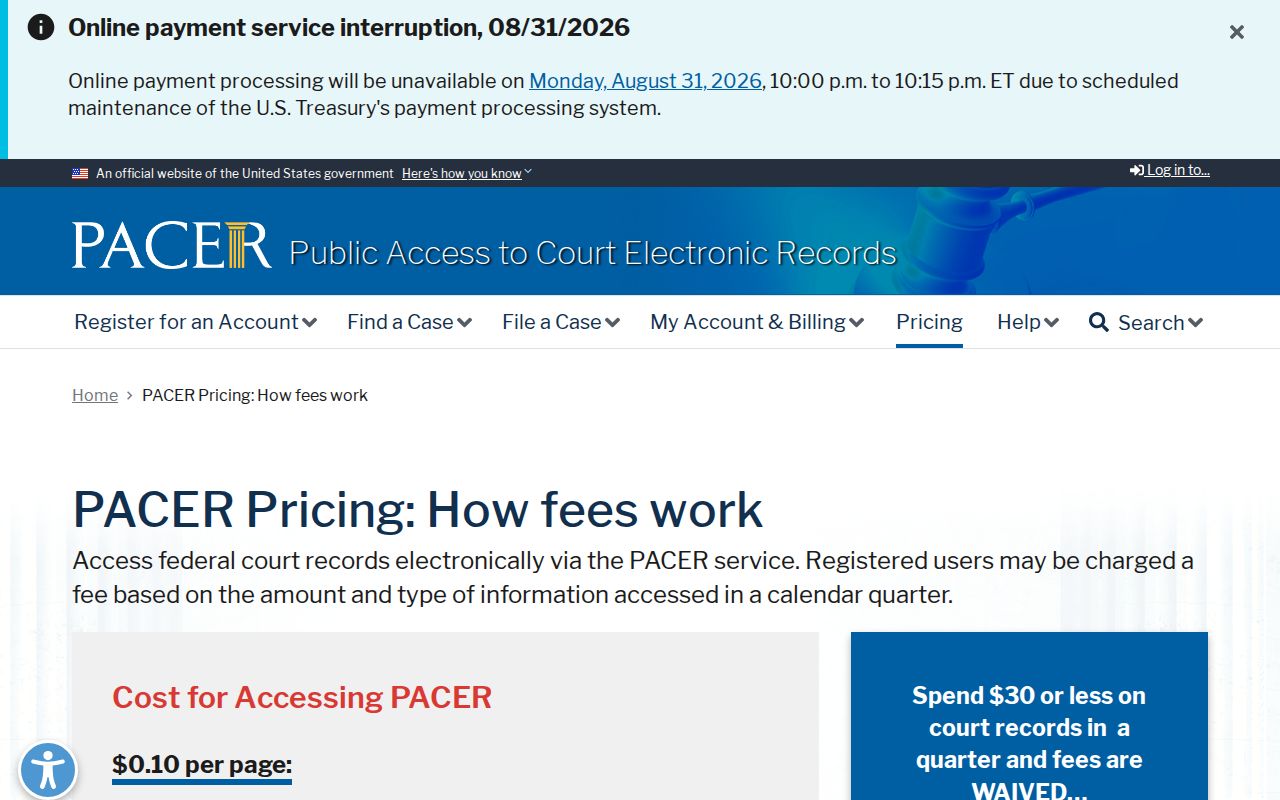
Keeping the federal and county systems separate sends each request to the office that truly maintains the file.